
Pool Filter Problems Caused by Autumn Leaves and How to Fix Them
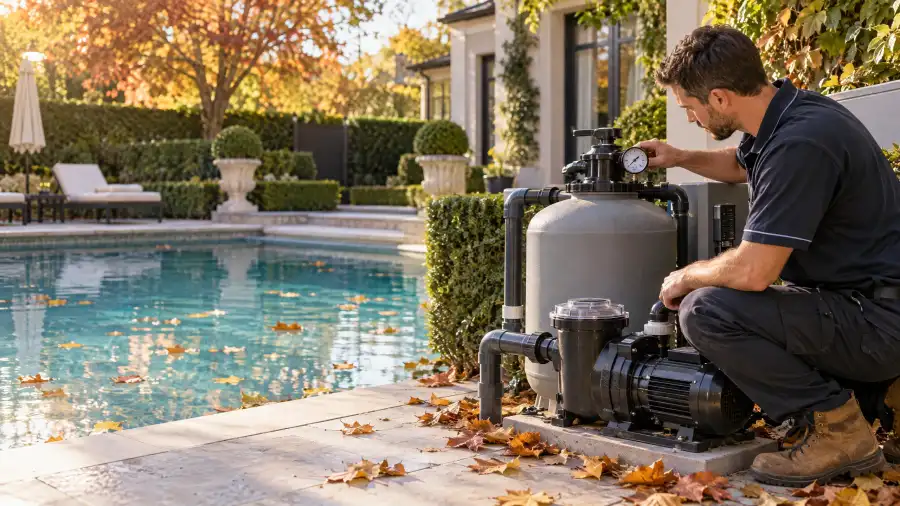
A practical guide to clearing leaf blockages, protecting circulation and keeping your pool ready as Melbourne’s leafy streets move into cooler weather.
Autumn is beautiful around Toorak, but a pool beneath plane trees, elms or dense garden planting can collect a surprising amount of leaf litter in a few days. The visible leaves on the surface are only part of the problem. Smaller fragments sink, fill the skimmer basket and load the filter with organic material. As the filter becomes restricted, water circulation falls, pressure can rise and the pool may turn dull or cloudy.
Leaf debris also breaks down in the water. That process consumes sanitiser and adds more work for the filter, after wind or rain. This guide explains what to look for, what you can do safely and when an inspection from a pool professional is the sensible next step.
Why autumn leaves create filter trouble
A pool system depends on steady movement: the skimmer draws in surface water, the pump sends it through the filter, and clean water returns to the pool. A heavy leaf load interrupts that sequence in several ways.
Blocked baskets restrict the flow
The skimmer basket and pump basket catch larger leaves before they reach the filter. When either basket is packed, the pump cannot draw water normally. You may notice bubbles in the return jets, a weak flow from the outlets or a pump that sounds different. Running a pump with poor water supply can place unnecessary strain on the motor and seal.
Fine particles clog the filter media
Leaves become soft and break into fragments. Pollen, soil and decomposed organic matter then lodge in a cartridge, sand bed or other filter media. A filter can look clean from the outside while still being loaded internally. Cloudy water that does not improve after routine circulation is often a sign that the filter needs proper cleaning, inspection or a media check.
Organic matter encourages algae
Leaves are a food source for algae and add demand to the pool’s sanitiser. If circulation is already weak, algae can establish in corners, steps and behind fittings. Once water starts to tint green, the issue is no longer just a blocked filter; it needs a broader assessment of debris, equipment and water balance. Our green pool recovery service explains how those causes are checked together.
Signs your pool filter is struggling
Check the pool and equipment regularly during heavy leaf fall. A single symptom does not identify the exact fault, but a pattern helps you act before the pump stops circulating.
- Return jets feel weaker than usual or stop moving water evenly.
- The pump is noisy, rattling, surging or repeatedly losing prime.
- The filter pressure gauge rises above its normal operating reading.
- The water stays cloudy after the surface has been skimmed.
- Leaves collect around the skimmer or settle heavily on the floor.
- The pump basket fills quickly, or you see air bubbles under its lid.
- The water level drops below the skimmer opening after evaporation or splash-out.
How to clear autumn leaf problems step by step
The safest order is to remove the largest debris first, restore the water level, then clean and assess the filtration system. Follow the manufacturer’s instructions for your specific equipment; filter designs and valve settings vary.
- Remove surface leaves before they sink. Use a leaf net rather than pushing a heavy raft of debris towards the skimmer. Work slowly around the edges and steps. Empty the net away from the pool so wind cannot return the leaves.
- Check the water level. The skimmer needs enough water to draw consistently. If the level is low, correct it before assessing circulation. If it falls again quickly, look for a leak and seek advice rather than continually topping up without finding the cause.
- Turn the system off before opening baskets. Isolate the equipment according to the manufacturer’s directions. Remove and hose out the skimmer basket and pump basket. Check for twigs, stones or damaged plastic that could move into the pump housing.
- Inspect the pump lid and visible seals. Clean the lid O-ring and mating surfaces, then refit the lid securely. Do not force a cracked lid or stretched seal. Air entering through the lid can cause noisy operation and reduce filtration.
- Clean the filter using the correct method. A cartridge filter may need removal and thorough rinsing; a sand filter may require a backwash and rinse cycle. Never guess at valve positions. Use the equipment manual, and release pressure fully before opening any filter housing.
- Restart and observe the returns. Once the system is correctly reassembled, prime it as instructed and watch for a steady flow. Listen for unusual sounds and check for leaks around unions, the lid and filter connections.
- Recheck the water after circulation. Remove any remaining debris from the floor, brush settled material towards the main drain where appropriate, and allow the filter to work. If cloudiness, high pressure or weak returns continue, stop repeated cleaning cycles and arrange a professional diagnosis.
Managing water chemistry after a leaf-heavy week
Clear-looking water is not proof that the chemistry is right. Rain can dilute the water, decomposing leaves can consume sanitiser, and poor circulation can leave different parts of the pool with different conditions. Test before adding products and use the instructions for your pool system.
Autumn is a good time to arrange pool chemistry balancing in Toorak if readings keep drifting, the water is cloudy or you are unsure whether the filter is coping. Digital testing can help identify pH, sanitiser, alkalinity, stabiliser, salt or hardness issues, while a visual equipment check can reveal whether chemistry is only a symptom of poor flow.
Avoid adding a large amount of chemicals simply because the water looks dull. Correcting levels without testing can waste product and may make the water harder to diagnose. If you have already added something and the pool is still cloudy, give the technician the product name and approximate amount so the assessment is more useful.
Preventing filter overload through autumn
Prevention is mostly about reducing the amount of debris that reaches the equipment. A few small habits make a substantial difference for Toorak pools surrounded by mature gardens.
- Skim after windy weather and before leaves have time to sink.
- Empty the skimmer and pump baskets before they become packed.
- Keep branches and garden waste from accumulating beside the pool.
- Inspect the pool cover for leaf build-up and pooled rainwater.
- Record the normal filter pressure so a rise is easy to spot.
- Keep a note of when the cartridge was cleaned or the sand filter was serviced.
- Use a leaf cover or suitable surface net if the pool’s location allows it.
regular pool maintenance can combine debris removal, basket cleaning, water checks and equipment observations. That is especially useful when a property is surrounded by trees, is used infrequently or will be unattended during school holidays.
When a filter needs more than cleaning
Cleaning removes the load, but it cannot repair a cracked cartridge, damaged laterals, a worn seal or a pump that cannot maintain flow. Recurring pressure spikes, dirty water returning to the pool or a filter that needs cleaning unusually often point to a fault or an undersized or ageing component.
Do not keep restarting a noisy or overheating pump in the hope that it will clear itself. A technician can assess the pump, filter, valves, unions and cleaner together rather than replacing parts without understanding the cause. If you notice a fault, use the verified pool equipment repair service for an inspection of pumps, filters and related equipment.
The site’s pool cleaning after winter service is also relevant when autumn leaves have remained under a cover and the pool needs debris removal, water testing and a circulation check before the next season.
Autumn filter checklist for Toorak homeowners
- Surface skim completed after windy days
- Water level checked at the skimmer
- Skimmer basket emptied
- Pump basket emptied with system off
- Filter pressure recorded and compared
- Filter cleaned using the correct method
- Return flow checked after restart
- Leaks, air and unusual sounds observed
- Water tested before chemical adjustments
- Professional inspection booked for recurring faults
Frequently asked questions
How often should I empty the baskets during leaf fall?
There is no single schedule for every pool. Check them daily during heavy shedding or after strong wind, then reduce the frequency when the load falls. A basket should never be allowed to become so full that it restricts the pump.
Why is my pool cloudy after I remove all the leaves?
Fine debris may still be trapped in the filter, or the water chemistry may have shifted. Poor circulation, early algae and a filter fault can look similar. Clean the filter correctly, allow circulation and test the water. If the haze persists, arrange an inspection.
Can I backwash every time the filter pressure rises?
Only if your filter type and manufacturer instructions call for backwashing. Cartridge filters are not backwashed, and incorrect valve operation can cause damage. Use the normal pressure recorded for your system as a guide and ask a professional if the reading changes suddenly.
Should I run the pump longer in autumn?
It may need to run longer after a large clean-up or storm, but the correct duration depends on pool volume, equipment, weather and water condition. Longer operation will not solve a blocked basket, air leak or failed component, so address the cause first.
When should I call a pool professional?
Call when the pump is noisy or overheating, pressure remains abnormal, water stays cloudy after cleaning, the pool turns green or you are not confident opening equipment. Professional testing can prevent repeated chemical adjustments and help identify a mechanical fault.